



Zakopane / Ždiar – Life in the shadow of the Tatra peaks has never known true borders. Wild nature, harsh conditions, and a unique culture have for centuries shaped a community whose heart beats just as strongly on the Slovak side as it does on the Polish side of the mountains. A new cross-border initiative now arrives with the goal of not only preserving this shared heritage but transforming it into a living bridge between the two nations.
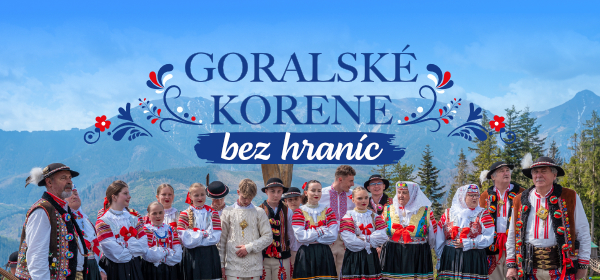
The Tatra Agency for Development, Promotion and Culture from Poland, in close cooperation with the Slovak civic association REHABIS, have officially launched a unique cross-border project entitled “Goral Roots Without Borders: Polish-Slovak Days of Folk Culture”. This visionary endeavor is co-financed by the European Union from the European Regional Development Fund under the renowned Interreg Poland – Slovakia 2021 – 2027 program.
Why did the project come about? The pressure of modernization and the search for roots
Today’s globalized world brings undeniable comfort, but hand in hand with it comes the risk of cultural unification. The traditional way of life, which has characterized the Tatra borderlands for generations, is gradually disappearing from everyday life under the pressure of modernization. Younger generations are losing contact with the crafts of their ancestors, and the unique dialect, the so-called “gwara”, is giving way to the standard language.
The Interreg project was created as a direct response to this urgent need to protect, revitalize, and popularize the vanishing expressions of tangible and intangible cultural heritage. The goal is not to create static museum exhibits, but to restore the original dynamism to traditions and make them an integral part of modern tourism and community life. Furthermore, by connecting Slovak and Polish partners, the mental barriers left behind by strict geopolitical borders in the past are being dismantled.
The Goral minority: Similar, yet unique
Who exactly are the Gorals? They are a specific ethnographic group shaped by Vlach colonization and the harsh mountain climate. Although they are united by immense resilience and a close connection to nature, crossings over the Tatra ridges have created fascinating differences on both sides of the border:
• Polish Gorals (Podhale): They are known for their extraordinarily vibrant temperament. Their traditional costumes are richly and distinctively decorated – men’s trousers feature characteristic, unmistakable heart-shaped embroideries called parzenice. The language (Podhale gwara) is robust and very fierce, and their traditional music is full of sharp, high-pitched string notes that reflect the wildness of the northern slopes of the Tatras.
• Slovak Gorals (Northern Spiš, Zamagurie, Orava, and Kysuce): They are characterized by slightly gentler, yet deeper lyricism. The Ždiar costume is completely unique in its coloration and ornamentation – dominated by striking red vests and specific embroideries inspired by the nature of the Belianske Tatras, which are more modest than the Polish ones, but exceptionally precise. Due to the influence of their surroundings, the Slovak Goral dialect has a softer melodic structure, and their music often combines temperament with drawn-out, more melancholic melodies.
However, traditional crafts such as leatherworking (production of belts and “krpce” leather shoes), weaving, carpentry, sheep wool processing, or painting on fabric and glass remain the same core pillar of survival on both sides of the border.
Where to experience authentic Goral culture with your own eyes?
The greatest asset of the „Goral Roots Without Borders“ project is its practical and experiential dimension. The organizers do not just want to talk about culture; they want people to experience it. During the upcoming summer season, two key events will therefore take place, where the general public, local residents, and foreign tourists can meet the actual bearers of these traditions.
MAIN PILLARS OF THE CULTURAL PROGRAM – AUGUST 2026
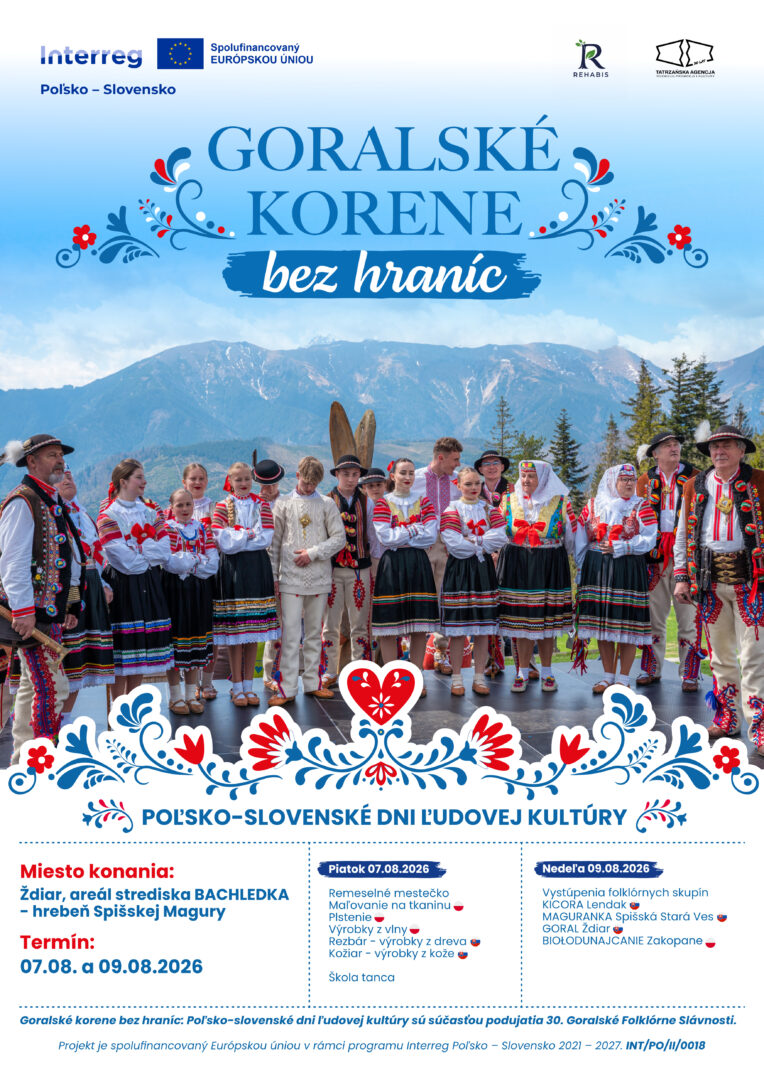
• Ždiar (Slovakia) – Polish-Slovak Days of Folk Culture
August 7 and 9, 2026
The event will highlight the strength of cross-border partnership. Visitors will be able to learn leather processing directly from master craftsmen, discover the secrets of traditional carpentry, or master the high-spirited steps of Goral dances directly below the Treetop Walk in the year-round family mountain resort Bachledka. The Polish-Slovak Days of Folk Culture in Ždiar are part of the jubilee 30th edition of the Goral Folklore Festival.
• Zakopane (Poland) – Polish-Slovak Days of Folk Culture
August 17 – 18, 2026
These will take place as part of the European Fair of Regional Products. Visitors will experience interactive craft workshops, tastings of traditional gastronomy, and performances by leading folklore ensembles.
Culture open to everyone
The Interreg project places extraordinary emphasis on inclusion and accessibility. All planned activities are designed to eliminate architectural and social barriers. Artistic presentations and craft workshops will be fully accessible to seniors, families with strollers, and persons with disabilities.
For a deeper understanding of the context, free bilingual Slovak-Polish brochures and information materials will be available for visitors, mapping out in detail the history of the presented crafts and the profiles of the performing ensembles.
The Interreg Poland – Slovakia program thus proves once again that investments in regional development make the most sense when they protect the most valuable asset we have in our regions – our own identity, the memory of our ancestors, and the ability to stand together regardless of border lines.
The project is co-financed by the European Union under the Interreg Poland – Slovakia 2021 – 2027 programme